ServicesCity Water Filtration
Rolling Hills Estates City Water Filtration
Our carbon systems are made for treated city water, taking the chlorine taste and odor out of every tap and shower. We match the system to your home's flow, mount it on the main line and book the job ahead of the warm months, when your water use peaks.
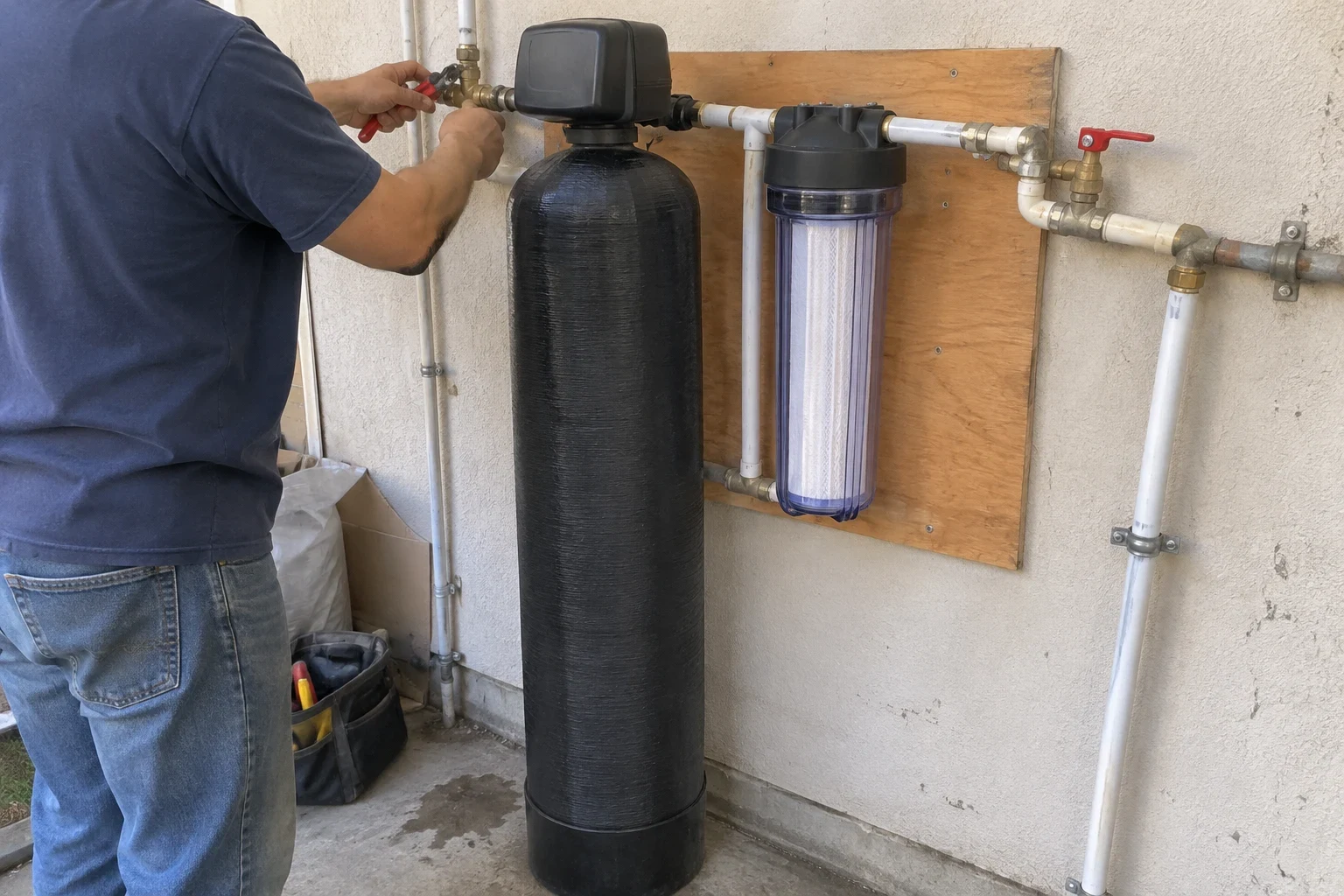
What a city water system does, and when it fits
City water is treated to meet drinking water standards, and part of that treatment is a disinfectant residual left in on purpose. Utilities add chlorine or chloramine so the water stays protected through miles of distribution pipe. That residual is what you taste in a glass and smell in a hot shower. A city water filtration system removes it after it has done its job, right where the main line enters your home.
The core is a tank of activated carbon. Standard carbon handles free chlorine well. Chloramine is a more stable compound that reacts slowly, so for supplies treated with it we use catalytic carbon, which has a modified surface that breaks the chlorine and ammonia bond. A sediment prefilter ahead of the tank catches pipe scale and grit so the carbon bed stays open and works at full contact.
This is the right system when your complaint is taste, odor or how your skin feels after a shower. If your main goal is purer drinking water at one faucet, our Reverse Osmosis page covers an under-sink option, and Whole Home Water Filtration covers larger multi-stage setups.
What the installation includes
Sizing to your flow rate
We tally your bathrooms and fixtures and check whether the main is 3/4 inch or 1 inch. A tank that is too small loses pressure when two showers run together. Water also moves through the bed too quickly for the carbon to grab the disinfectant.
Carbon matched to your disinfectant
Your water provider publishes an annual water quality report that states whether it treats with chlorine or chloramine. We check it and load the tank with media that reacts with that specific compound.
Sediment prefilter
A cartridge housing sits upstream of the tank and holds back grit and pipe scale. Cartridges are inexpensive and quick to change, and they keep the carbon bed from plugging before its time.
Bypass valve and shutoffs
With the bypass, water flows around the system while the media is being changed, so the rest of the house keeps running.
Free installation
Free install (we cover the cost). Your bill covers the hardware itself, while the labor of cutting in and connecting the system costs you nothing.
Signs your home could use city water filtration
A pool smell at the kitchen tap
That sharp smell is the disinfectant residual. It is not a safety problem, but it is the most common reason people stop drinking from the tap.
Odor that gets stronger in summer
Warm water releases dissolved chlorine more readily, so a hot shower or a sun-warmed pipe smells stronger in July than in January. Having a system in place by late spring means it is working when the heat arrives.
Dry skin and brittle hair after showering
Chlorine strips natural oils. Filtering at the main line treats shower water too, which a pitcher filter or faucet cartridge cannot do.
An old filter housing nobody has serviced
If your home came with a filter and you cannot say when the media was last changed, the carbon is likely spent. Exhausted carbon lets chlorine pass straight through.
Rubber parts wearing out early
Chloramine can soften rubber toilet flappers and faucet washers faster than plain chlorine. Repeated flapper replacements are a clue worth mentioning on the call.
How the job runs, from call to cleanup
- 1
A phone conversation first
We ask about the size of your home, how many bathrooms it has, where the main line enters and what you notice in the water. You get your quote by phone before anything goes on the schedule.
- 2
Choosing the install point
Around Rolling Hills Estates the main often enters by the garage or along an outside wall. We look for a spot with room to service the tank later and a drain or yard area for flush water.
- 3
Cutting in the system
We shut off the supply, cut into the main and set the bypass, prefilter and carbon tank. Wherever copper joins galvanized steel, dielectric fittings go in to keep the joint from corroding.
- 4
Flushing and pressure check
Fresh carbon sheds fine black dust, so we run water through until it comes out clear before reopening the house. Then we test pressure at the farthest fixture and look over every joint for drips.
- 5
Walkthrough and cleanup
Before leaving, we demonstrate the bypass handles and point out the prefilter change interval. Boxes, wrapping and pipe offcuts leave with us.
What moves the price
Labor is not part of your bill, so the total depends mainly on the hardware your home calls for. On the phone we walk through each component and why it is on the list, and you see the full equipment cost before any install day is booked.
- Tank size
- A home with more bathrooms pulls more water at peak times, which means a taller tank holding more carbon. The bigger tank costs more on day one, but the extra media stretches the time before it needs replacing.
- Type of carbon
- Catalytic carbon carries a higher price than plain activated carbon because its surface is treated to break down chloramine. If your utility's report shows free chlorine only, standard carbon does the job and we leave the upgrade off your quote.
- Parts at the install point
- Older galvanized lines need transition fittings to join new copper or PEX. If the main has to be extended a few feet to reach a spot you can service, that pipe and those fittings go on the parts list too.
- Prefilter and protective cover
- Choosing a larger sediment housing, or adding a weather cover for a tank mounted outdoors, raises the equipment total.
City water filtration questions
Something not covered here? (310) 872-5891
Will a carbon tank lower my water pressure?
Very little, when the tank fits the house. When people do notice a drop, the usual cause is undersizing, or a prefilter cartridge left in place long after it clogged with grit. We size from your fixture count so a shower, a second shower and the dishwasher can all draw at once.
How long does the carbon last before it is replaced?
That comes down to three things: the size of the tank, how much water your household goes through and the disinfectant level your utility runs. A main-line tank holds far more media than a faucet cartridge, so its service life is much longer. The sediment prefilter is the part you change more often, and we show you the steps before we leave.
Does this system remove hardness or scale?
No. Carbon adsorbs chlorine, chloramine and many compounds that affect taste and smell, but calcium and magnesium pass through it. If white buildup on fixtures is what bothers you most, mention it on the call so we can be clear about what a city water system will and will not change.
Do I still need reverse osmosis for drinking water?
Not always. Most people find carbon-filtered city water tastes clean on its own. A reverse osmosis unit under the kitchen sink goes a step further, cutting dissolved solids and trace contaminants at that one faucet, and some homeowners add one for drinking and cooking.
When is the best time of year to install?
Spring is a good window. The tank is working before summer heat makes the chlorine smell stronger, and there is usually more room in our schedule to match your dates before the warm months.
Take the chlorine taste out of your water
Give us a rough count of your fixtures and tell us where the water supply enters the house. We will pick the carbon your utility's disinfectant needs and go over every part before a date goes on the calendar.