ServicesWhole Home Water Filtration
Whole Home Water Filtration in Rolling Hills Estates
We connect a carbon filtration tank where water first enters your home, so showers, laundry and the kitchen faucet all draw from one filtered supply. The tank is sized to your highest flow, so pressure holds when the dishwasher and two showers run together.
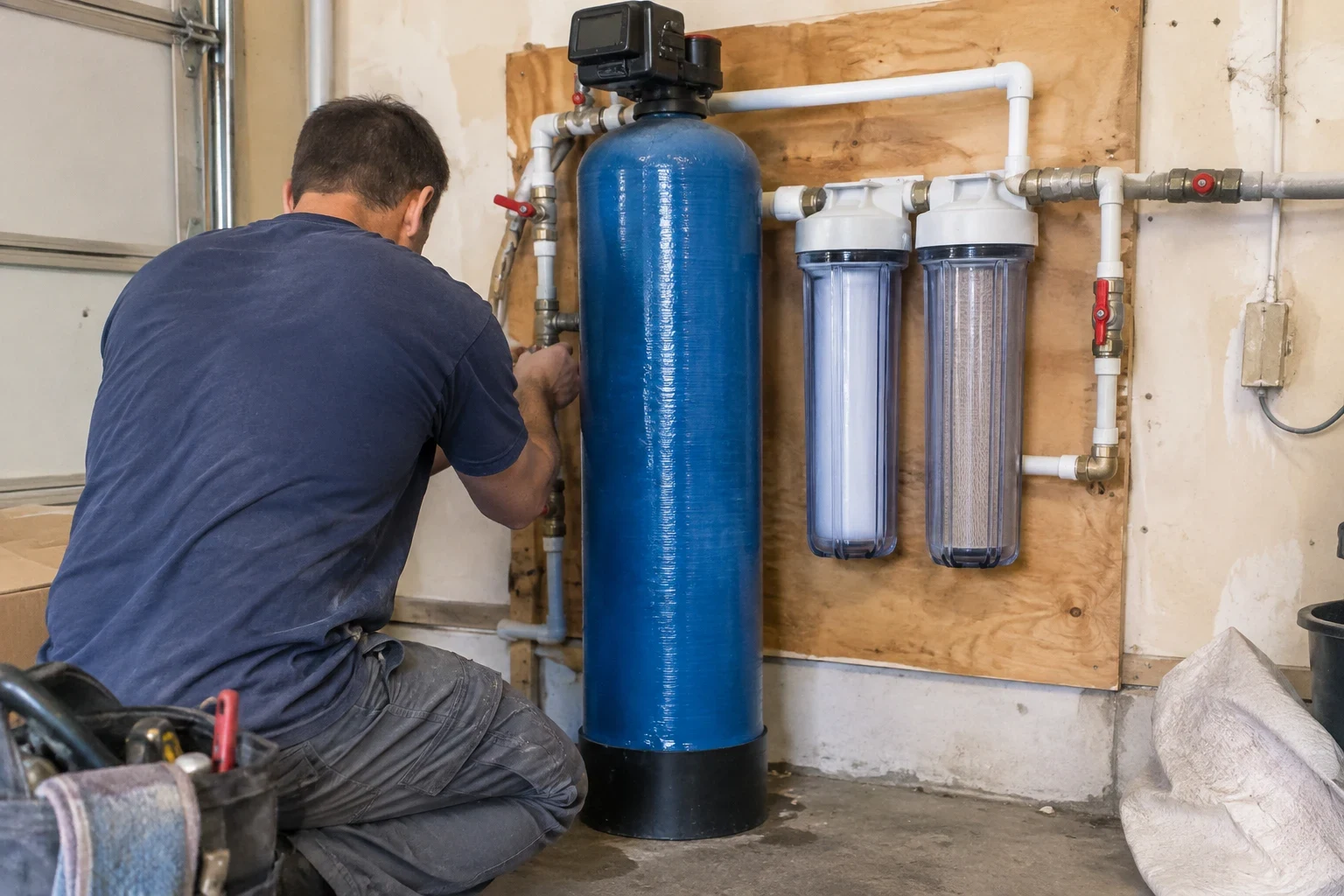
Filtering Water Where It Enters
The tank goes in just past your main shutoff, ahead of the point where pipes split off to the water heater, bathrooms and kitchen. All the water bound for a fixture passes through it first. So your shower, washing machine and fridge dispenser get filtered water too, not just one sink.
City water in Southern California meets drinking standards, and many local suppliers disinfect with chloramine, a blend of chlorine and ammonia. Because it holds together better than free chlorine, ordinary carbon removes it slowly. We fill a tank with catalytic carbon and size it so water still spends enough time in contact with the media at your highest flow. Water rushing through a small housing barely gets treated.
We try to finish installs ahead of summer, when longer showers, extra laundry and visiting guests push flow higher than a small tank can handle. If drinking water is your only concern, an under-sink reverse osmosis unit might suit you better, and we will tell you that on the call.
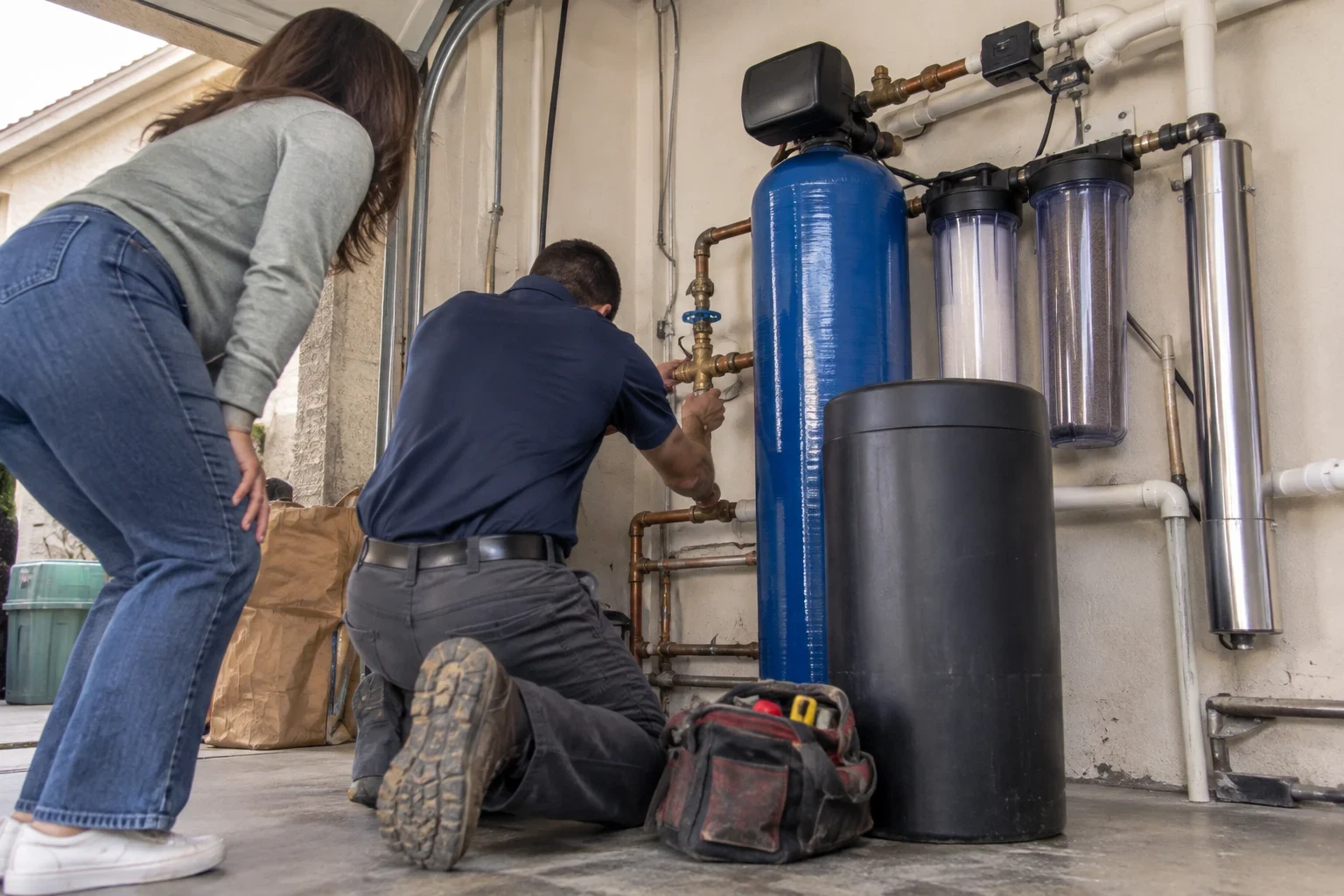
Parts and Work in Every Install
- 01
Sediment prefilter
The first housing in line traps sand, loose pipe scale and rust flakes. Clean water reaching the carbon keeps the bed from forming channels that let water slip past untreated.
- 02
Catalytic carbon tank
We size the main tank from your bathroom count and peak gallons per minute. Its carbon has a treated surface that breaks down chloramine faster than standard granular media.
- 03
Bypass and isolation valves
A three-valve bypass sends water past the tanks while we change a cartridge or service the media, so your faucets keep running the whole time. Each valve is labeled so anyone in the house can operate it.
- 04
Control head and drain
Backwashing tanks discharge rinse water, so we run the drain line to a standpipe or approved air gap. That gap keeps wastewater from ever pulling back into your supply.
- 05
Proper joints and sun protection
Dielectric fittings go wherever copper meets galvanized steel, which stops corrosion at the connection. Outdoor installs get a cover, since summer sun slowly degrades plastic housings and tanks.
Questions about Whole Home Water Filtration?
Call(310) 872-5891Signs Your Home Needs Whole Home Filtration
Chemical smell in the shower
A pool-like odor is strongest in hot, steamy water because heat drives disinfectant out of the water and into the air you breathe.
Filtered water at only one tap
If the kitchen tastes fine but the bathroom sink and ice maker do not, your filtering stops at one fixture.
Toilet flappers and washers wearing out early
Chloramine is known to degrade some rubber parts. Flappers that warp, or faucet washers that crack sooner than they should, can point to it.
Grit in faucet aerators
Sand or dark flakes in aerator screens mean sediment is moving through your pipes and reaching every fixture and appliance.
Pitchers and fridge cartridges everywhere
Buying and changing several small filters around the house often costs more over a few years than one system at the main line.
How the Job Runs
- 1
The phone call
Tell us how many bathrooms you have, where your main shutoff is and what you notice in the water. We read your supplier's annual water quality report and suggest a tank size and prefilter setup.
- 2
Measuring at your home
We check static water pressure, pipe size and material at the main, and the space available in the garage, side yard or exterior wall. These numbers set the tank size and how the pipe gets routed.
- 3
Installation day
We shut off the main, cut in the bypass, set the prefilter and tank, and run the drain. Then we rinse the new carbon until the water runs clear, check every joint under pressure and flush the lines so no fines reach your fixtures. Your water is off for a few hours in most homes.
- 4
Walkthrough
We show you the bypass valves, how to swap the sediment cartridge and when to do it. We also point out the seasonal check worth doing before summer use climbs.
What Moves the Price
Every unit we put in comes with our standing offer: free install (we cover the cost). The total depends on the equipment your home calls for and how much pipe work it takes to mount it in a sensible spot. We go through it line by line on the phone and again after measuring, so each part of the number has a reason behind it.
- Peak flow and tank size
- A household with four bathrooms and several people showering in the morning needs a bigger media tank than a two-bath home. The larger bed keeps contact time and pressure where they should be.
- Where the main line surfaces
- A main that comes up in the garage is a short job. If it runs under a slab or sits far from usable wall space, we add pipe and fittings to reach a good mounting location.
- Media and prefilter choice
- Catalytic carbon costs more than standard granular carbon. Water that carries a lot of sand or scale may call for a bigger prefilter housing or a second one.
- Drain and permit needs
- The distance to a proper drain changes the materials list. If the work requires a plumbing permit, we include it in the job.
Questions About Filtering the Whole House
Does this get rid of the spots on my shower glass?
It does not. Those marks are calcium and magnesium that stay behind when water evaporates, and carbon cannot remove dissolved minerals. A whole home carbon system goes after the taste and smell of disinfectant, and its prefilter stops sediment. We explain this up front so you buy a system that fixes what bothers you.
Is my pressure going to go down?
When the tank fits the house, the loss is slight and most households never feel it. Problems come from a tank that is undersized for the flow, which is why we test pressure and count fixtures before picking one. A sediment cartridge left in too long can also cut pressure.
What maintenance should I plan for?
The sediment cartridge gets swapped every few months, or earlier if your water has more grit. The carbon bed lasts several years, and how many depends on how much water your household uses each day. We walk you through both before we leave.
Will I want reverse osmosis on top of this?
Maybe not. Many households are satisfied with carbon-filtered water from every tap. If you would like fewer dissolved solids in drinking and cooking water, an under-sink reverse osmosis unit at the kitchen works well alongside a whole home system.
How is this different from the other systems you install?
Whole home filtration is a single carbon tank with a prefilter on the main line. Dual tank water filtration adds another treatment stage for homes that need it, and city water filtration is designed around the issues of municipal water. On the call, we help you choose.
Get Filtered Water at Every Tap
Tell us your bathroom count and where your main line comes in. We will size a system for your home's real flow and explain each part of the quote.