ServicesReverse Osmosis
Reverse Osmosis in Rolling Hills Estates
We fit reverse osmosis under your kitchen sink so drinking and cooking water passes a sediment stage, a carbon block, a fine membrane and a final polishing cartridge. You get your own faucet, a pressurized tank matched to how much your household drinks, and a plain schedule for cartridge changes.
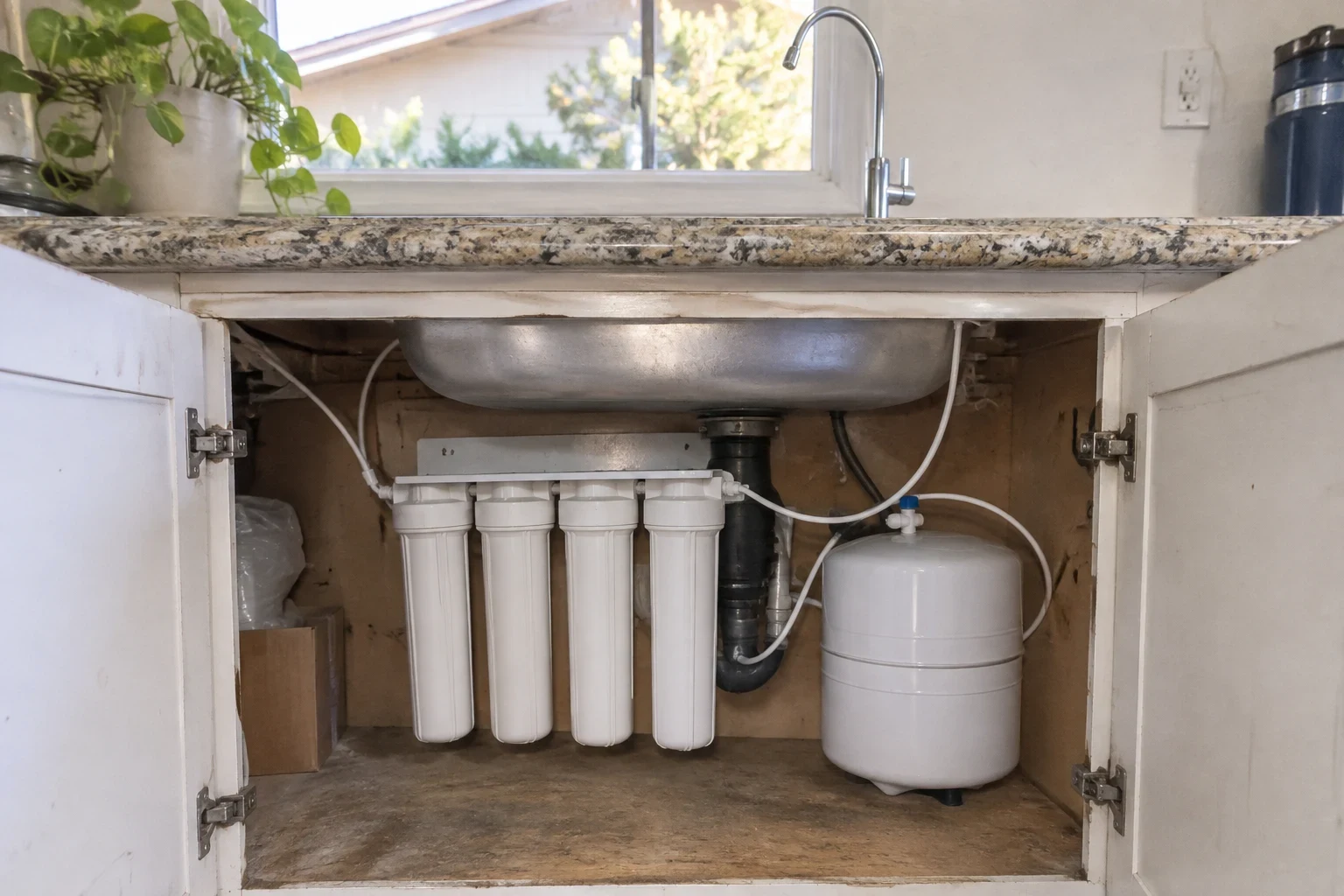
What Reverse Osmosis Does and When It Fits
Reverse osmosis relies on the pressure already in your supply line to force water across a semi-permeable membrane. Its openings are tiny, well below what any carbon cartridge can catch. Dissolved salts, many metals and other trace contaminants are held back and flushed to the drain. The purified water, called permeate, fills a small storage tank that serves its own faucet at the sink.
It is the right choice when your focus is what you drink and cook with: an off taste, white spots on glassware, older pipes you have doubts about, or simply wanting less in the glass. It is not designed to treat every tap in the house. For filtered water at the showers and laundry as well, see our Whole Home Water Filtration page.
We time installs to the seasons. A membrane produces less as the incoming water cools, and households drink more through a hot Southern California summer, so we choose the tank size and set filter changes with both in mind.
What Your Reverse Osmosis Install Includes
Sediment prefilter
A spun polypropylene cartridge is the first stop for sand, rust flakes and loose pipe scale. Trapping that grit early keeps the carbon stage open and protects the membrane surface from abrasion.
Carbon block prefilter
Chlorine and chloramine slowly degrade thin-film composite membranes. The carbon block strips out the disinfectant upstream, which guards the membrane and removes most of that chemical flavor.
Thin-film membrane and flow restrictor
The membrane is where the separation actually happens. A restrictor on the drain line keeps enough back-pressure on the membrane to work and controls how much rinse water leaves the system.
Pressurized storage tank
A steel or polymer tank with an internal air bladder holds finished water and pushes it to the faucet at a usable flow. We set the air precharge before the first fill, because a low charge gives you a weak dribble.
Polishing filter and faucet
On its way out of the tank, water passes one last carbon cartridge that removes any flat taste picked up in storage. The dedicated faucet goes into a spare hole in your sink, or we bore a neat opening in the deck or countertop.
Drain saddle, shutoff and fridge line
A drain saddle clamps onto the drain pipe above the P-trap, and the feed valve gets its own shutoff. Want filtered water at the refrigerator or ice maker too, and we route a line there on the same visit.
Signs Reverse Osmosis Belongs Under Your Sink
You buy bottled water every week
Weekly cases of bottled water cost money and eat up pantry space. With a membrane system, water of that quality comes straight from your own faucet.
White spots on dishes and kettles
Spotty glasses and scale building up in a kettle point to dissolved minerals getting through. The membrane holds back most of them before they reach your glass.
A chemical taste or smell
A swimming-pool flavor usually traces back to the disinfectant your water utility adds. The carbon stages take it out, and coffee and tea taste noticeably cleaner.
Older plumbing in the house
Aging supply lines and fixtures in older homes can add metals at the tap. An RO system at the kitchen sink directly cuts what ends up in your drinking water.
Your current filter is not keeping up
Pitcher and faucet-mount filters rely on carbon alone and clog fast. If you replace them constantly and still dislike the taste, a membrane system is the next step.
How Install Day Runs
- 1
Phone conversation first
We ask about your sink, the space inside the cabinet, how many people drink from the tap and whether the fridge should be connected. Those answers set the tank size and the parts we load up.
- 2
Check pressure and layout
A gauge goes on the supply line before anything else, since a membrane needs steady pressure to produce well. If the reading is low, we talk through a small booster pump before any drilling.
- 3
Mount and connect
We close the cold supply, fit the feed valve, fasten the filter housings to the cabinet wall and set the tank in place. The drain saddle sits above the trap so rinse water leaves cleanly.
- 4
Flush, check and clean up
Fresh carbon and a new membrane shed fine particles, so the first couple of tank fills go straight to the drain. Then we go over each connection for leaks, read output at the faucet with a TDS meter, show you how a cartridge swap works and leave the cabinet tidy.
What Affects the Cost of Reverse Osmosis
Your price comes down to the system you choose and what we find under your kitchen sink. We walk through each option by phone before anything is ordered. Free install (we cover the cost) means your money goes to equipment, not labor. These are the factors that move that equipment cost.
- Number of stages
- Most homes do well with a standard four or five stage system. A remineralization cartridge or a UV lamp adds to the price and adds one more part to replace on schedule.
- Tank size
- A bigger household, or one that drinks a lot through summer, may need a larger tank. That costs more and takes up more of the cabinet.
- Incoming water pressure
- If the gauge shows weak supply pressure, a small booster pump keeps the membrane producing and cuts the amount of rinse water. That pump is an added part.
- Faucet and fridge add-ons
- The faucet finish you pick, drilling a fresh countertop hole and running tubing to a refrigerator or ice maker each add parts to the order.
- Ongoing cartridge costs
- Replacement cartridges vary in price by brand and by how many stages you have. We tell you that running cost up front so the first filter change holds no surprise.
Reverse Osmosis Questions
Something not covered here? (310) 872-5891
How much water goes down the drain?
Any RO unit sends part of the incoming water to the drain, because that flow carries away what the membrane rejects. The ratio depends on the membrane itself, the flow restrictor on the drain line and the pressure in your pipes. Steady pressure and a restrictor matched to the membrane keep that rinse water modest, and a booster pump helps in homes where pressure reads low.
Will the water taste flat?
Removing most dissolved minerals can make the water seem lighter in the mouth than what you drink now. Most people adjust within a few days and come to like it. If you still miss the old character, we can add a remineralization cartridge after the tank that returns a small amount of calcium and magnesium for a fuller flavor.
When should the cartridges be replaced?
The sediment and carbon prefilters usually last six to twelve months. Keeping them fresh is what protects the membrane and lets it run for years. We like to schedule that swap in late spring, before the warm months when your home goes through the most drinking water, and your actual use decides the exact timing.
Why does it fill slower in winter?
Water moves through the membrane more slowly when the feed is cold, so output dips through the cooler months. The tank keeps refilling, only at a slower pace. Choosing the right tank size at install covers that seasonal slowdown.
Can it supply my refrigerator and ice maker?
Yes. On the same visit we run tubing from the system to the fridge connection. Ice made from RO water freezes clearer and avoids the stale taste unfiltered ice tends to pick up.
Get Better Drinking Water at Your Sink
We install reverse osmosis in Rolling Hills Estates and nearby towns like Torrance and Rancho Palos Verdes. Tell us about your sink and household, and we will recommend the right system and tank size.