ServicesDual Tank Filtration
Dual Tank Water Filtration in Rolling Hills Estates
A dual tank system pairs a carbon tank that strips chlorine taste and odor with a resin tank that pulls out the calcium and magnesium behind scale. We size both tanks to your home's flow, set them at the main line and program the valve before we leave.
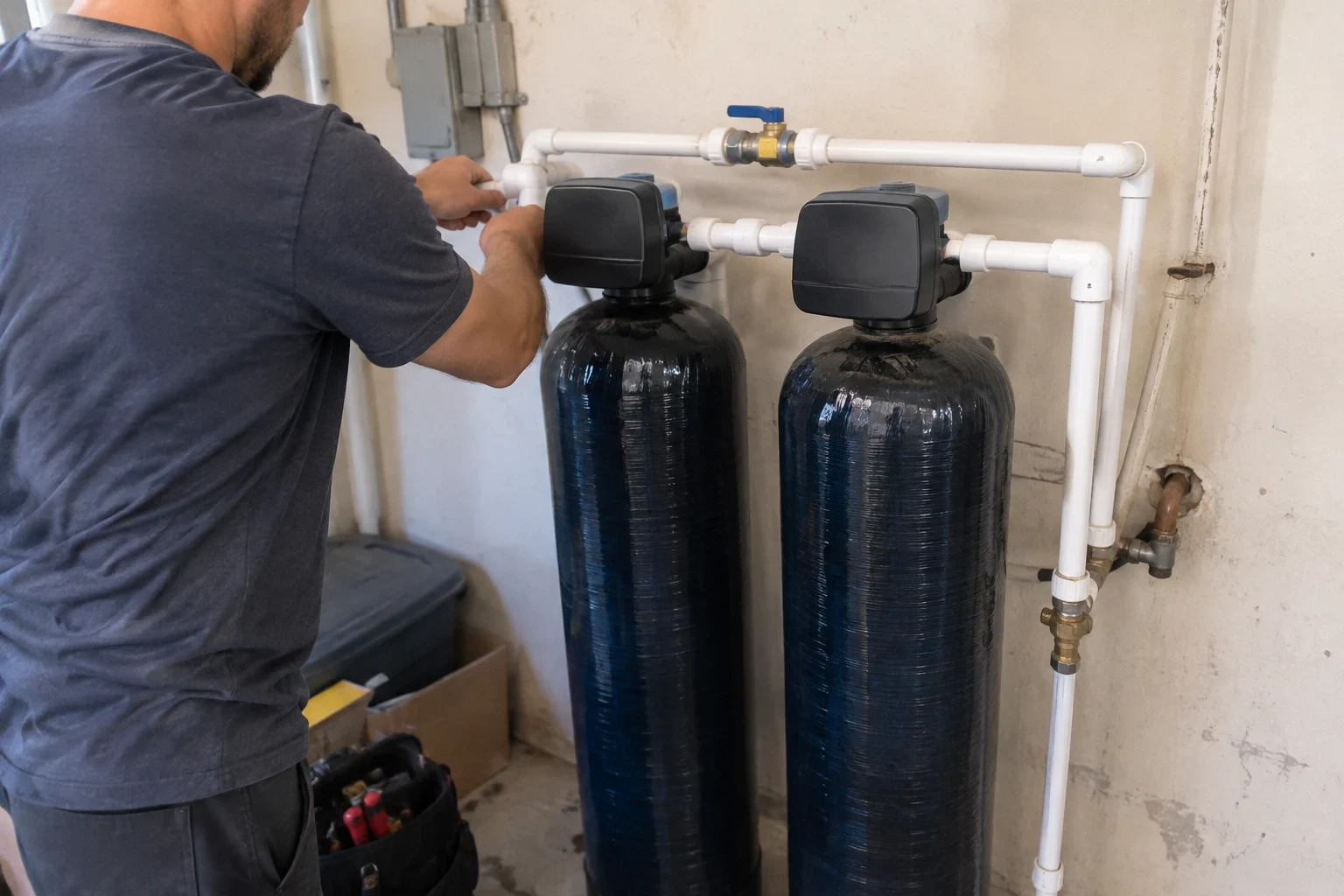
Two Tanks, Two Different Jobs
Most single filters try to do everything in one cartridge and do none of it well for long. A dual tank system splits the work. Water enters the first tank, a tall fiberglass-wrapped vessel filled with granular or catalytic carbon. Carbon adsorbs chlorine and chloramine, the disinfectants utilities add, along with the odors they carry. The water then moves into the second tank, where ion-exchange resin beads trade hardness minerals for sodium. A separate brine tank holds the salt that recharges that resin.
Because the system sits where the main line enters your home, it treats the shower, the washer, the dishwasher and the water heater, not just one faucet. That matters for scale. Hard minerals settle out fastest when water is heated, so the water heater, tankless heat exchangers and showerheads take the worst of it.
Timing helps. Southern California summers push household water use up with more showers, laundry and dishes, and that is when scale builds fastest. Getting a system in place in spring means the resin is working before the heaviest months instead of catching up after them.
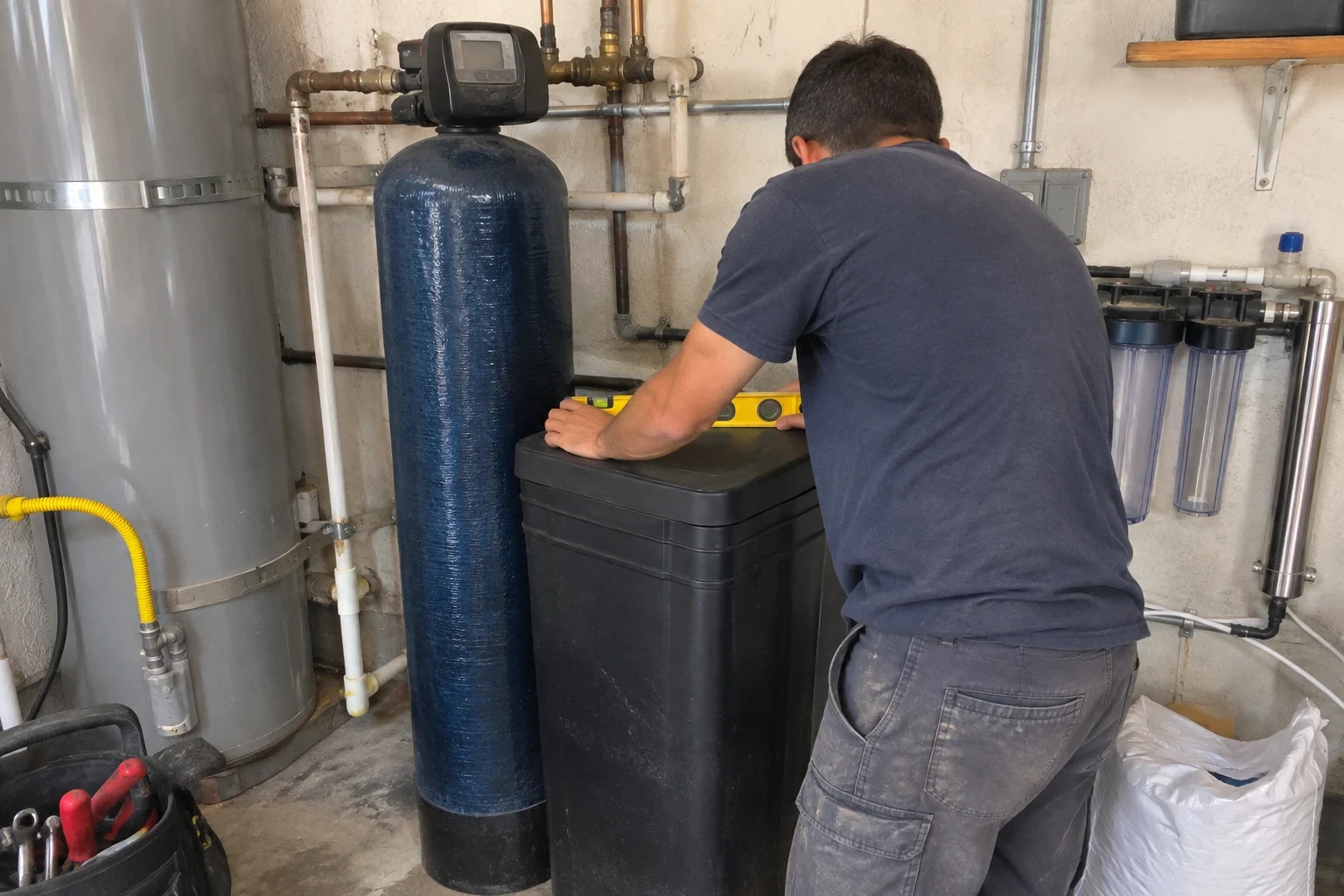
What Comes With Every Dual Tank Install
- 01
Tanks matched to peak demand
We tally your showers, toilets and appliances to work out how much water your home pulls at its busiest moment, then choose tank diameters that hold pressure with two showers and the washer going together. A tank that is too small causes a pressure dip and lets some water pass through untreated.
- 02
The right carbon for your supply
Ordinary granular carbon does a good job on free chlorine. Where a water district disinfects with chloramine, we use catalytic carbon, which breaks the chlorine-ammonia bond much more effectively.
- 03
Bypass valve at the main
A bypass lets you take the tanks offline for service while the rest of the house keeps running water.
- 04
Drain line with a proper air gap
Each regeneration flushes rinse water out of the resin tank. We run that discharge hose to a laundry standpipe or floor drain and leave a clear gap above the drain opening, so the rinse water can never siphon back into your supply lines.
- 05
Brine tank and first salt fill
We place the brine tank, hook up the brine line and set the control valve's schedule. Free salt provided to tank upon install, so the first regeneration can run right away.
- 06
Startup flush and walkthrough
Fresh carbon sheds fine black dust, so we backwash until the water comes out clear. Before we leave, we point out the bypass handle, how to read the salt level and what the valve display means.
Questions about Dual Tank Filtration?
Call(310) 872-5891Signs a Dual Tank System Fits Your Home
Pool-like smell at the tap
A chlorine or chemical odor, strongest in hot water from the shower, points to disinfectant the carbon tank would remove.
White crust on fixtures
Chalky rings on faucets, showerheads and glass shower doors are calcium carbonate left behind as water evaporates.
Water heater noise or slow recovery
Popping or rumbling from a tank heater usually means mineral sediment has built up on the bottom and is trapping steam bubbles. It also wastes energy heating through that layer.
Spotty dishes and stiff towels
Hard minerals react with detergent and leave film on glassware and residue in fabric, so you end up using more soap for worse results.
A tankless heater needing frequent descaling
Narrow heat exchanger passages clog quickly with scale. Treating water before it reaches the unit protects it.
From First Call to Clear Water
- 1
Start with a phone call
Tell us what you see and smell at the taps, how many people live in your home and where the water main comes into the house. With that, we go over tank sizes and carbon grade and book a time to come out.
- 2
Picking the location
We need a level surface close to the main line, usually in the garage or against an outside wall, plus a drain nearby and an outlet for the control valve. When the main sits somewhere tricky, we map the pipe run ahead of install day.
- 3
Plumbing the tanks in
After shutting off your water, we open the main, fit the bypass and tie in the inlet and outlet lines with copper or PEX. Expect the water to be off for a few hours, and we give you a time when it will be back on.
- 4
Pressure, flush and test cycle
We bring pressure up gradually, inspect each joint for leaks, backwash the carbon, trigger a test regeneration and make sure the valve draws brine. Then we explain what the system does overnight and the few things worth keeping an eye on.
What Moves the Price
Installation is free; we cover the cost. What changes the total is the equipment itself and how much plumbing it takes to reach your main line. We go over each piece by phone so the number you hear has a reason behind it.
- Tank size
- Larger households need bigger tanks with more media to hold flow and go longer between regenerations. Bigger tanks cost more but stretch the time between salt refills.
- Carbon media grade
- When a water district disinfects with chloramine, the first tank needs catalytic carbon, which is priced above ordinary granular media. If plain chlorine is all your supply carries, we stick with the standard grade.
- Control valve features
- Metered valves regenerate based on actual gallons used rather than a fixed timer, which saves salt and water over time.
- Distance and pipe condition
- A main line far from a suitable spot or aging galvanized pipe at the connection can mean more material to do the job right.
Common Questions About Dual Tank Systems
How is this different from your whole home water filtration?
Both systems connect at the main line. A dual tank setup pairs carbon filtration with a resin tank that regenerates with salt to control scale. If the chlorine taste bothers you and you see no crust on fixtures, our whole home water filtration option is often the simpler choice, and we will say so.
Will it change my drinking water?
The carbon tank takes out the chlorine taste and the resin lowers hardness, so water from every faucet usually tastes cleaner. Some homeowners want their drinking and cooking water refined one step further, and for that we add reverse osmosis under the kitchen sink.
How often do I add salt?
Salt use follows three things: the resin volume in your second tank, the mineral load in your supply and the number of gallons your family runs each day. Check the brine tank every few weeks. Once the salt sits lower than the water inside, add another bag. Summer usually means more frequent refills, since showers and laundry loads go up.
Does the system need power?
The control valve plugs into a standard outlet to keep its clock and run regeneration. Filtering itself works on your water pressure, so a short outage only pushes back the next regeneration.
Will my water pressure drop?
When the tanks match your fixture count, the pressure loss is small enough that most people never notice it. That is the reason we pick tank diameters for your house rather than putting the same unit in every home.
Stop Scale and Chlorine Taste at the Main Line
Give us a rundown of your household, your fixtures and the symptoms that bother you, from crusty showerheads to a chlorine smell. We will recommend tank sizes and a carbon grade and walk you through a clear quote by phone.